
French Macarons
Delicate almond meringue shells with ruffled feet and a chewy centre — the finicky little cookies that humbled me for months before they finally worked.
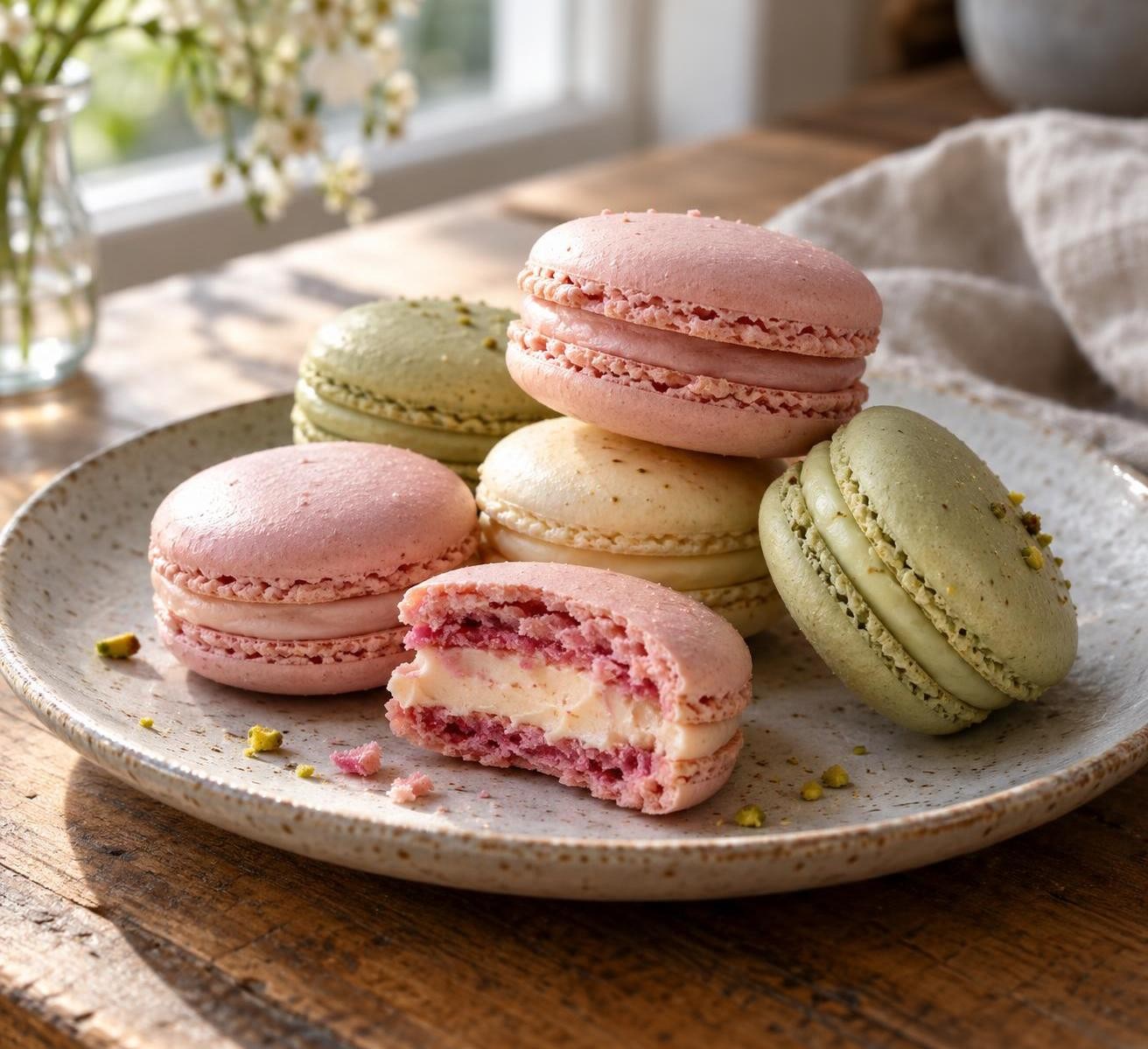
Macarons defeated me more times than I care to admit. Cracked shells, no feet, hollow insides, tops that spread into flat wafers — I made every mistake there is, and a few I think I invented. For a while I was convinced they were less a recipe and more a personality test, and mine kept failing.
What nobody tells you at first is that macarons are all about small, unglamorous details: sifting the almond flour until it is fine, ageing the egg whites, and above all the macaronage — the folding stage where you deflate the batter to exactly the right point. Too little and the tops crack and stay bumpy. Too much and they spread and go footless. The batter should flow off the spatula in a thick ribbon that melts back into itself in about ten seconds.
The other thing that finally clicked was resting the piped shells until they form a skin you can touch without any batter sticking to your finger. That skin is what forces the rise upward into those little ruffled feet instead of cracking out the top. And a low, steady oven — every oven is different, so I had to learn mine by trial and error.
They are still the most temperamental thing I bake, and I will not pretend otherwise. But when a tray comes out with smooth, glossy tops and neat little feet, I feel like I have gotten away with something. Fill them, let them mature overnight in the fridge, and they turn tender and chewy — worth every failed batch it took to get here.
At a glance
- Prep
- 45 min
- Cook
- 16 min
- Total
- 90 min
- Yield
- About 24 filled macarons
- Difficulty
- Hard
Ingredients
- **For the shells:**
- 100g almond flour (finely ground)
- 100g icing sugar
- 75g egg whites (about 2 large), aged and room temperature
- 75g granulated sugar
- 1/4 tsp cream of tartar (optional, for stability)
- Gel food colouring (optional; never liquid)
- **For a simple vanilla buttercream filling:**
- 115g butter, softened
- 150g icing sugar, sifted
- 1 tsp pure vanilla extract
- 1 to 2 tsp milk, as needed
Method
-
Sift the almond flour and icing sugar together twice, discarding any large bits that will not pass through. A fine dry mix is essential for smooth shells.
-
Make the meringue: Beat the room-temperature egg whites with the cream of tartar until foamy. Gradually add the granulated sugar and beat to stiff, glossy peaks that hold firmly on the whisk. Beat in gel colouring now if using.
-
Macaronage: Add the sifted dry mix to the meringue. Fold with a spatula, pressing the batter against the bowl and scooping up, until it flows in a thick ribbon that sinks back into itself in about 10 seconds. This is the make-or-break step — stop the moment you reach the ribbon stage.
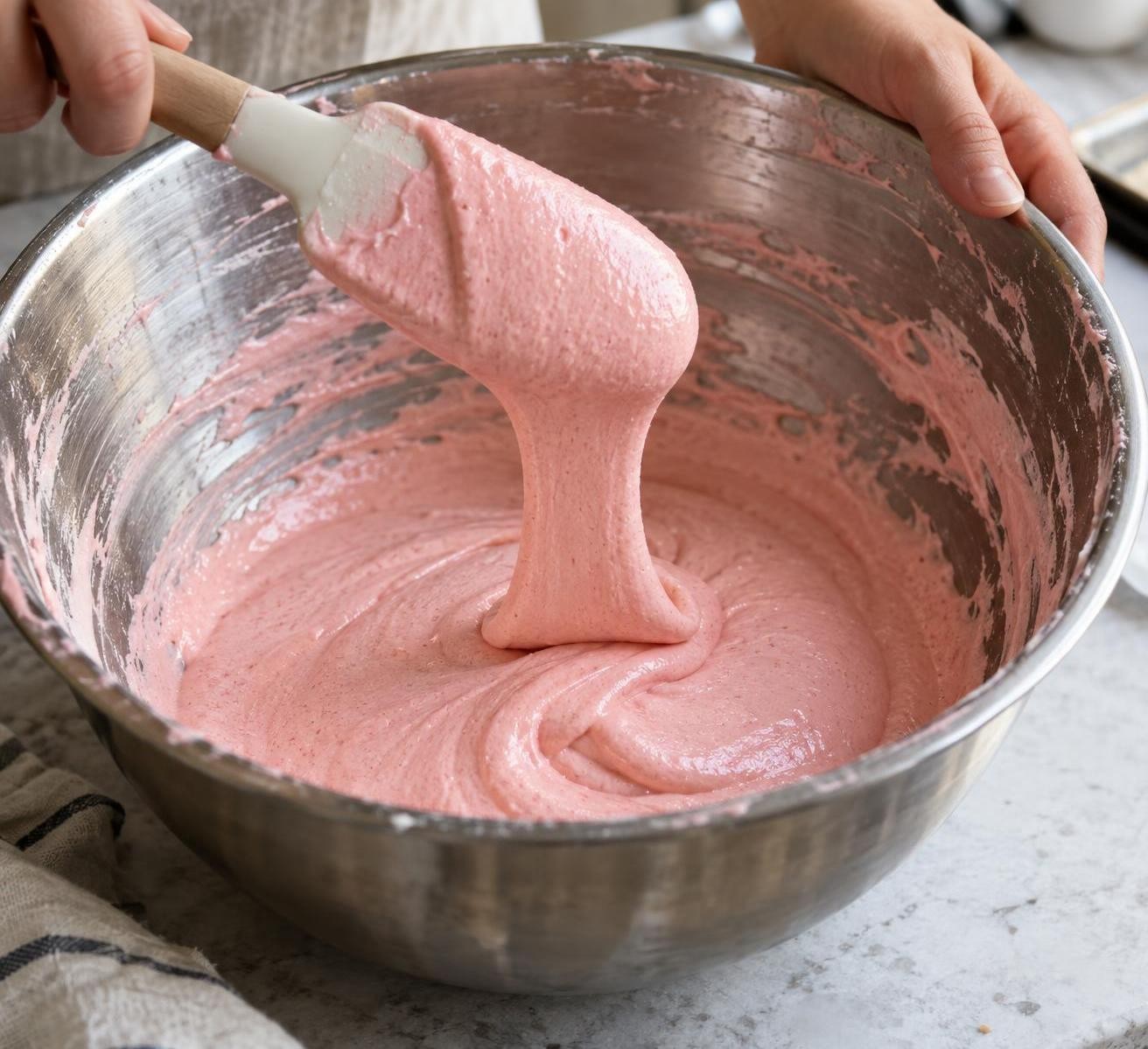
Fold until the batter falls in a thick ribbon and melts back into itself. -
Transfer to a piping bag with a round tip. Pipe 1.5-inch (about 4 cm) circles onto parchment or a silicone mat, spacing them apart. Rap the tray firmly on the counter several times to release air bubbles, and pop any visible bubbles with a toothpick.
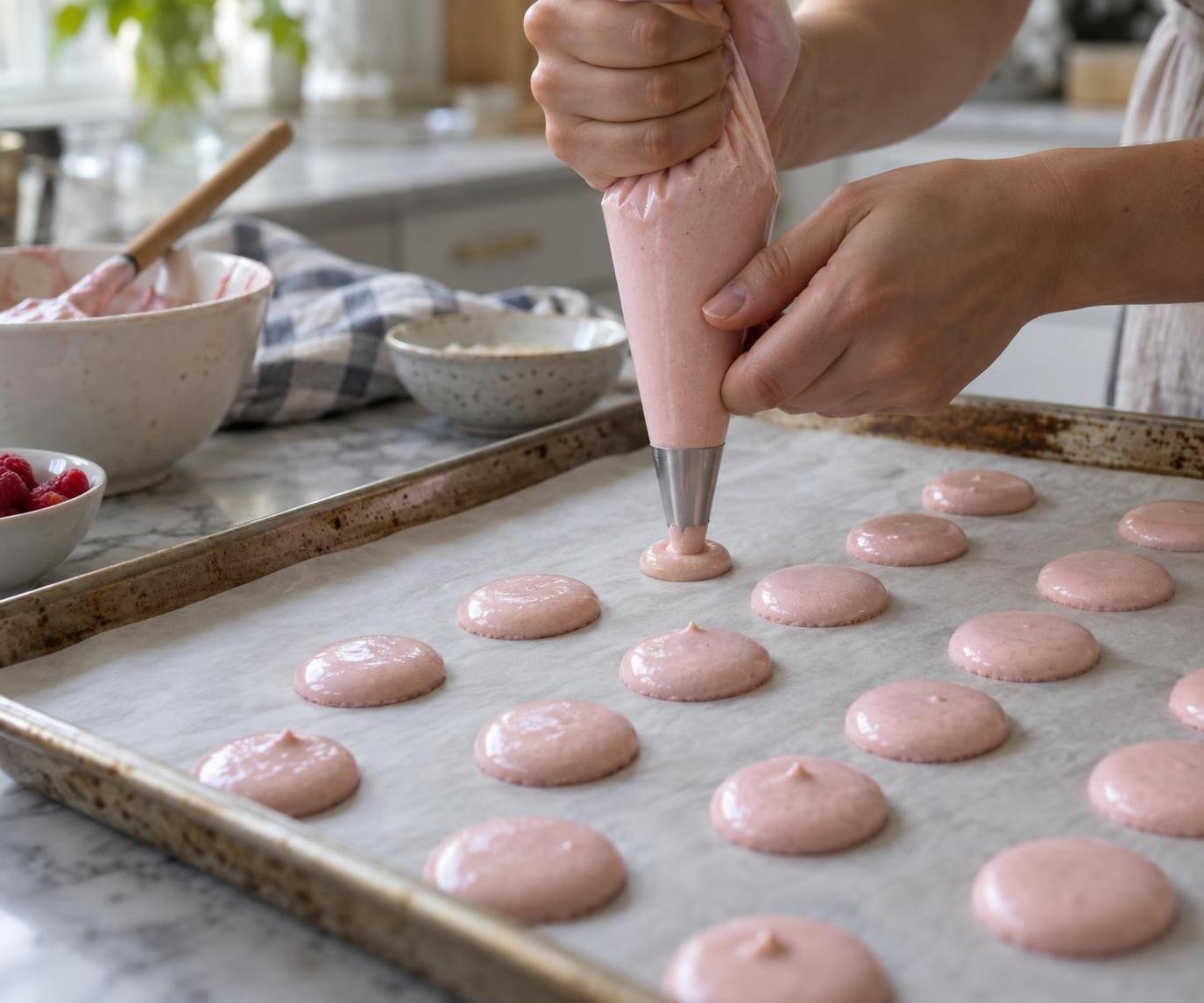
Pipe evenly sized rounds, then release air bubbles before resting. -
Rest the piped shells at room temperature for 30 to 60 minutes, until a skin forms — you should be able to lightly touch a shell without batter sticking to your finger. Humidity lengthens this; a dry room speeds it up.
-
Bake: Preheat the oven to 150°C (300°F). Bake one tray at a time on the middle rack for 14 to 18 minutes. The shells are done when they have neat feet and do not wobble on their feet when gently nudged. Let cool completely on the tray before removing.
-
Make the filling: Beat the softened butter until pale and fluffy, add the sifted icing sugar and vanilla, and beat smooth, adding milk a little at a time for a pipeable consistency.
-
Match the shells into pairs, pipe filling onto one half, and sandwich gently. Refrigerate in an airtight container for 24 hours before eating — this 'maturing' step gives them their signature tender, chewy centre.
Tips & Swaps
- Weigh everything with a scale. Macarons are unforgiving of guesswork — grams matter more here than in almost any other bake.
- Age your egg whites: leave them covered in the fridge for a day (or on the counter for a few hours), then bring to room temperature. Aged whites whip more stably.
- Master the macaronage. The batter should ribbon off the spatula and flatten back into itself in about 10 seconds. Under-folded cracks; over-folded spreads flat.
- Do not skip the rest before baking. The skin that forms is what pushes the rise into feet instead of cracking the tops.
- Every oven is different. If shells crack, lower the temperature; if they are hollow, they likely underbaked or were over-folded. Keep notes and adjust batch to batch.
- Always mature filled macarons overnight in the fridge — freshly filled shells are crisp and dry, but a day of rest makes them tender and chewy.
Nutrition
Per serving · 1 macaron
- Calories
- 110 kcal
- Fat
- 6 g
- Saturated fat
- 3 g
- Cholesterol
- 10 mg
- Sodium
- 15 mg
- Carbs
- 13 g
- Fiber
- 0 g
- Sugar
- 12 g
- Protein
- 1 g
Estimated values, calculated per serving. Actual nutrition varies with ingredients and portion sizes.
You might also like
 Desserts
 Classic Chocolate Chip Cookies
Soft, chewy chocolate chip cookies with crispy edges, the kind that disappear from the cookie jar in a day.
 Pastries
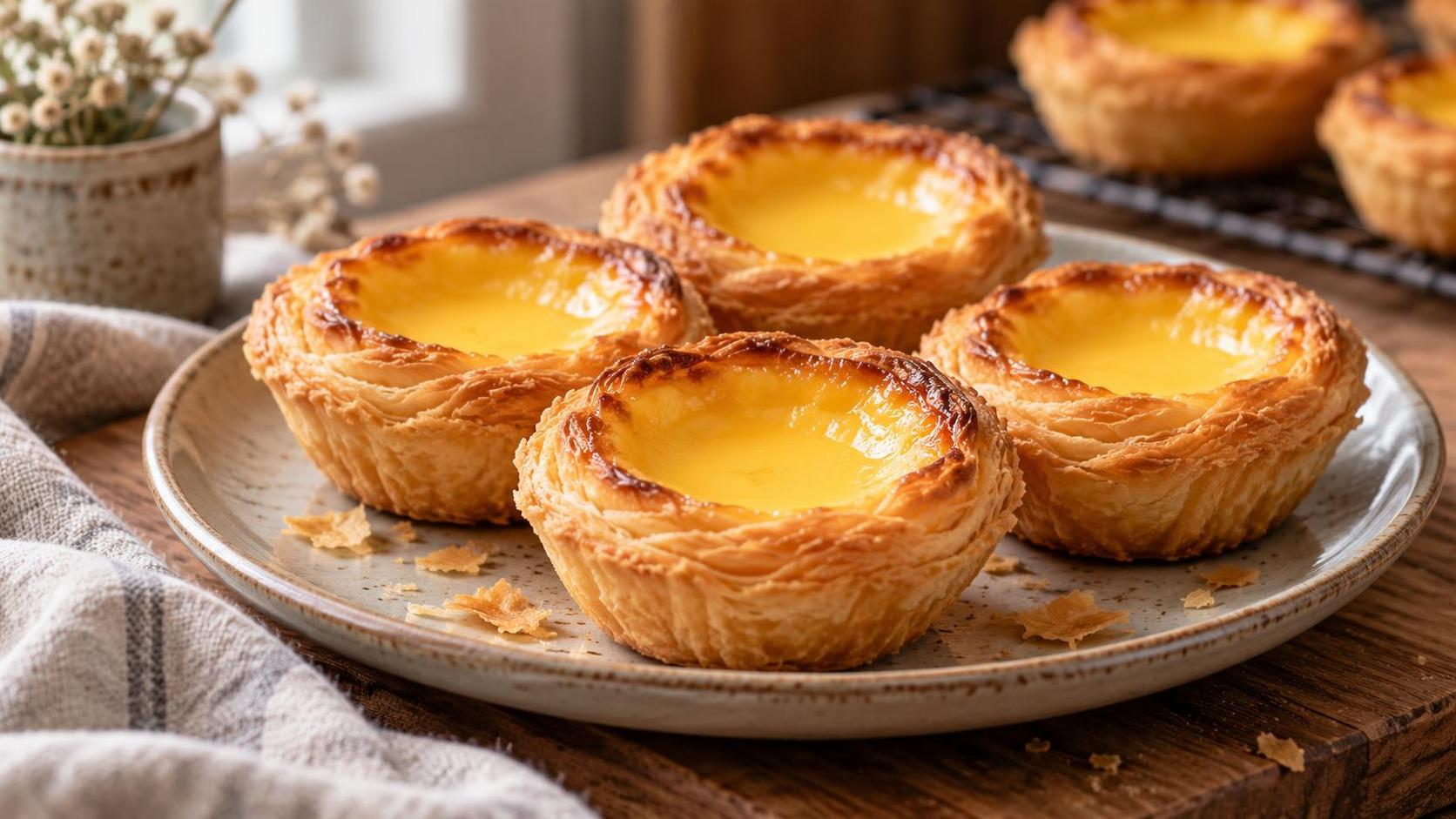
 Hong Kong Egg Tarts (Dan Tat)
Silky, wobbly custard in a crisp cookie-style crust — the dan tat I chased through every Chinatown bakery until I could finally make them at home.